 EN
EN
Quick Links
Shandong Aonai Biopharmaceutical Co., Ltd., a professional pet supplement manufacturer and pet supplement supplier based in Linyi City, Shandong Province, China, has announced the publication of a peer-reviewed research paper by its R&D scientist, Jianxin Zhang, in the Journal of Advances in International Veterinary Research (Volume 07, Issue 01, June 2025). The paper, titled "Effect Evaluation of Personalized Formula on Pet Nutrition Supplement" (DOI: 10.26549/jaivr.v7i1.39507), was submitted on June 3, 2025, accepted on June 13, 2025, and published online on June 30, 2025. This achievement marks an important milestone in the company's scientific research efforts and strongly validates its "science-driven innovation" philosophy in the pet health industry.
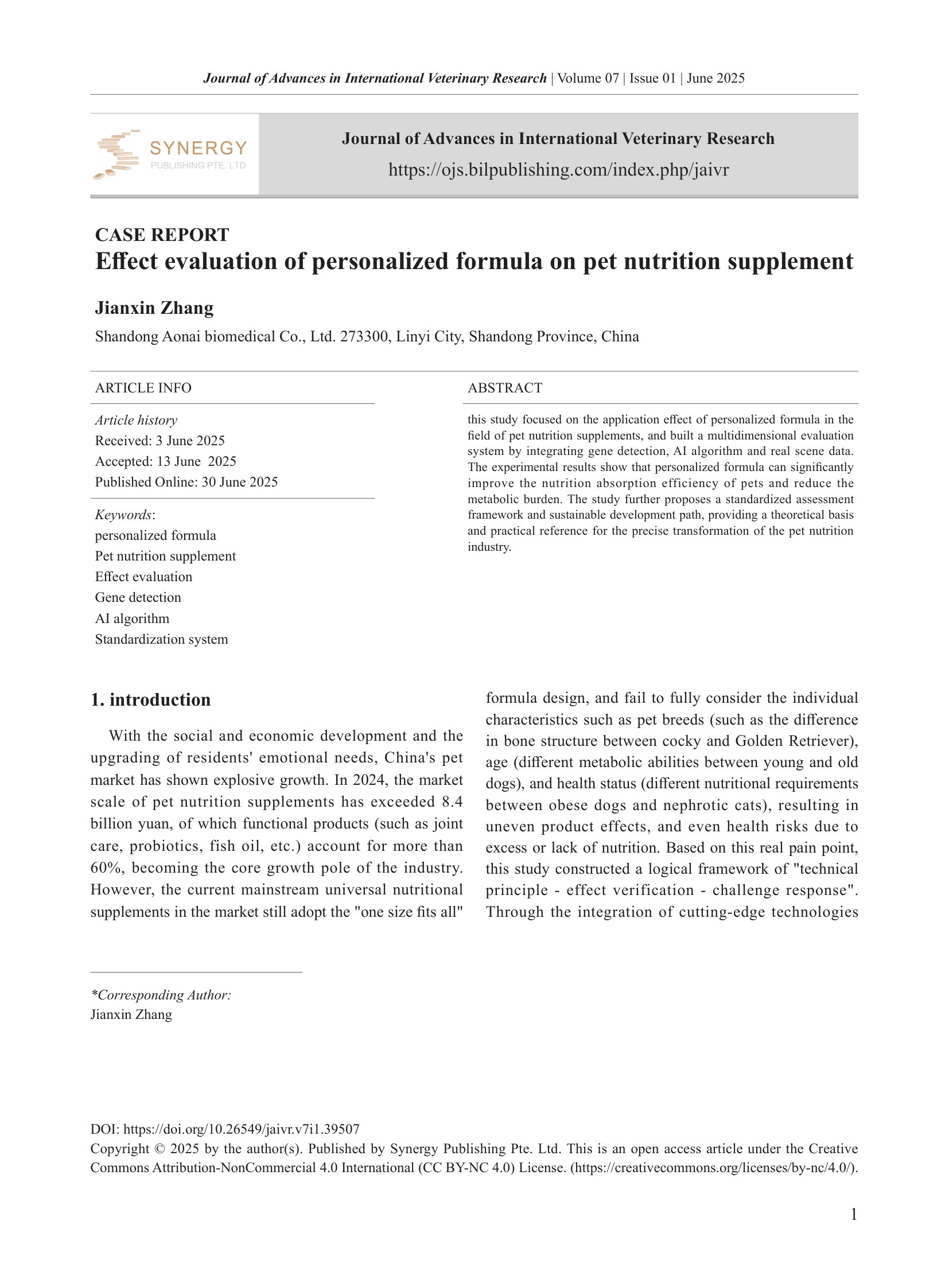
The Journal of Advances in International Veterinary Research is an international, peer-reviewed, open-access journal published by Synergy Publishing Pte. Ltd., dedicated to veterinary science, animal health, and animal nutrition. Publication in this journal means the research has undergone rigorous peer review and carries internationally recognized academic value. For Shandong Aonai Biopharmaceutical, it is also a strong signal to global partners that the company's R&D capability has earned recognition from the international academic community ― an advantage that matters when buyers evaluate a pet supplement manufacturer or supplier for long-term cooperation.
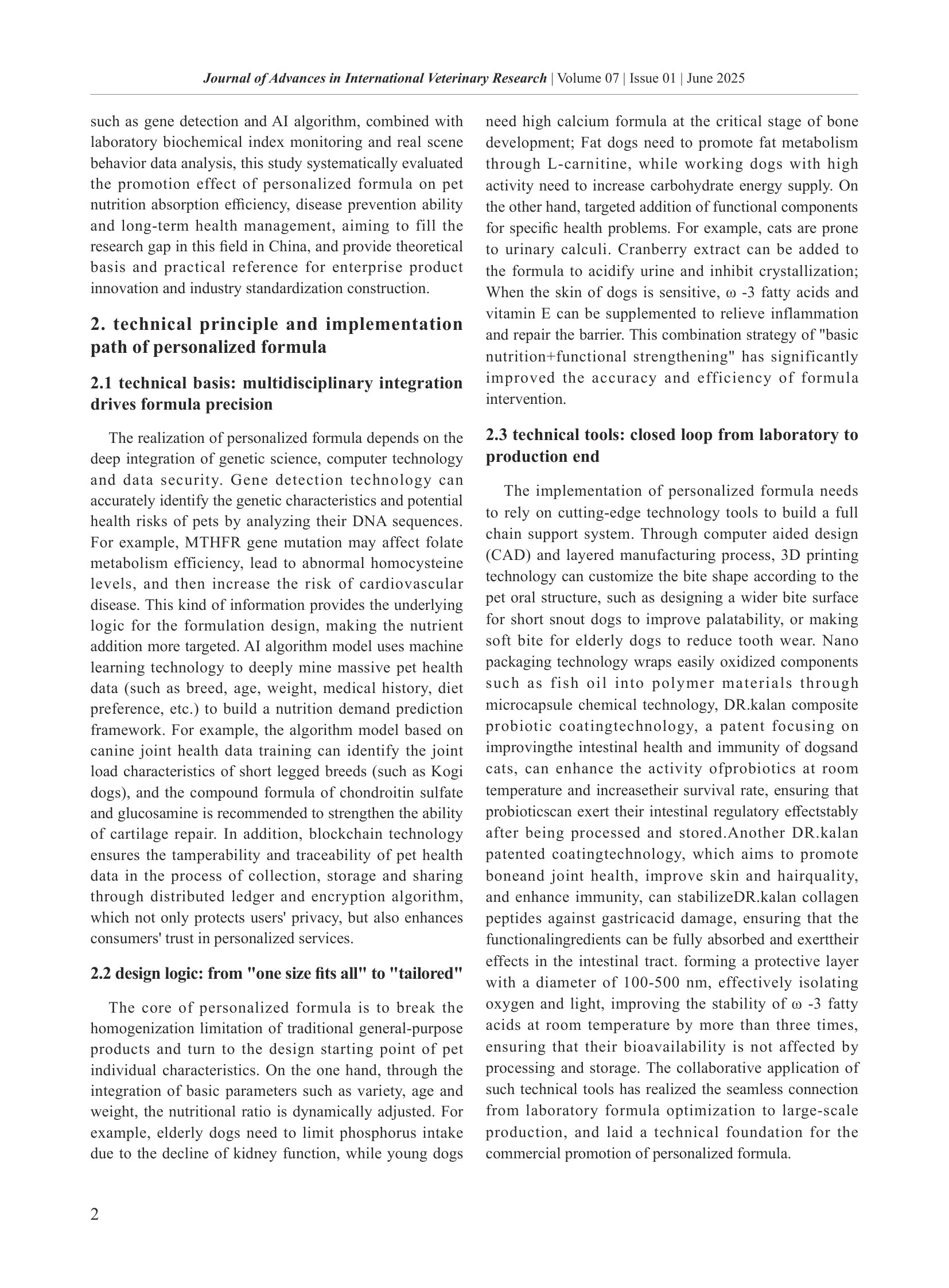
The paper begins with an in-depth analysis of China's pet market. As the economy grows and pet owners' emotional needs upgrade, the Chinese pet market has experienced explosive growth. In 2024, the market scale of pet nutrition supplements exceeded RMB 8.4 billion, with functional products ― such as joint care, probiotics, and fish oil ― accounting for more than 60% of the market and becoming the core growth engine of the industry. However, the paper sharply identifies a critical pain point: mainstream universal pet nutrition supplements still adopt a "one size fits all" formula design that fails to consider individual pet characteristics:
Breed differences: for example, the structural differences in bone development between Corgis and Golden Retrievers;
Age differences: the different metabolic capacities of young and senior dogs;
Health condition differences: obese dogs and cats with kidney disease have completely different nutritional requirements.
This crude approach leads to uneven product efficacy and, in some cases, health risks caused by nutrient excess or deficiency. It was precisely this real-world pain point that drove Shandong Aonai's research team to build a complete research framework of "technical principle ― efficacy verification ― challenge response."
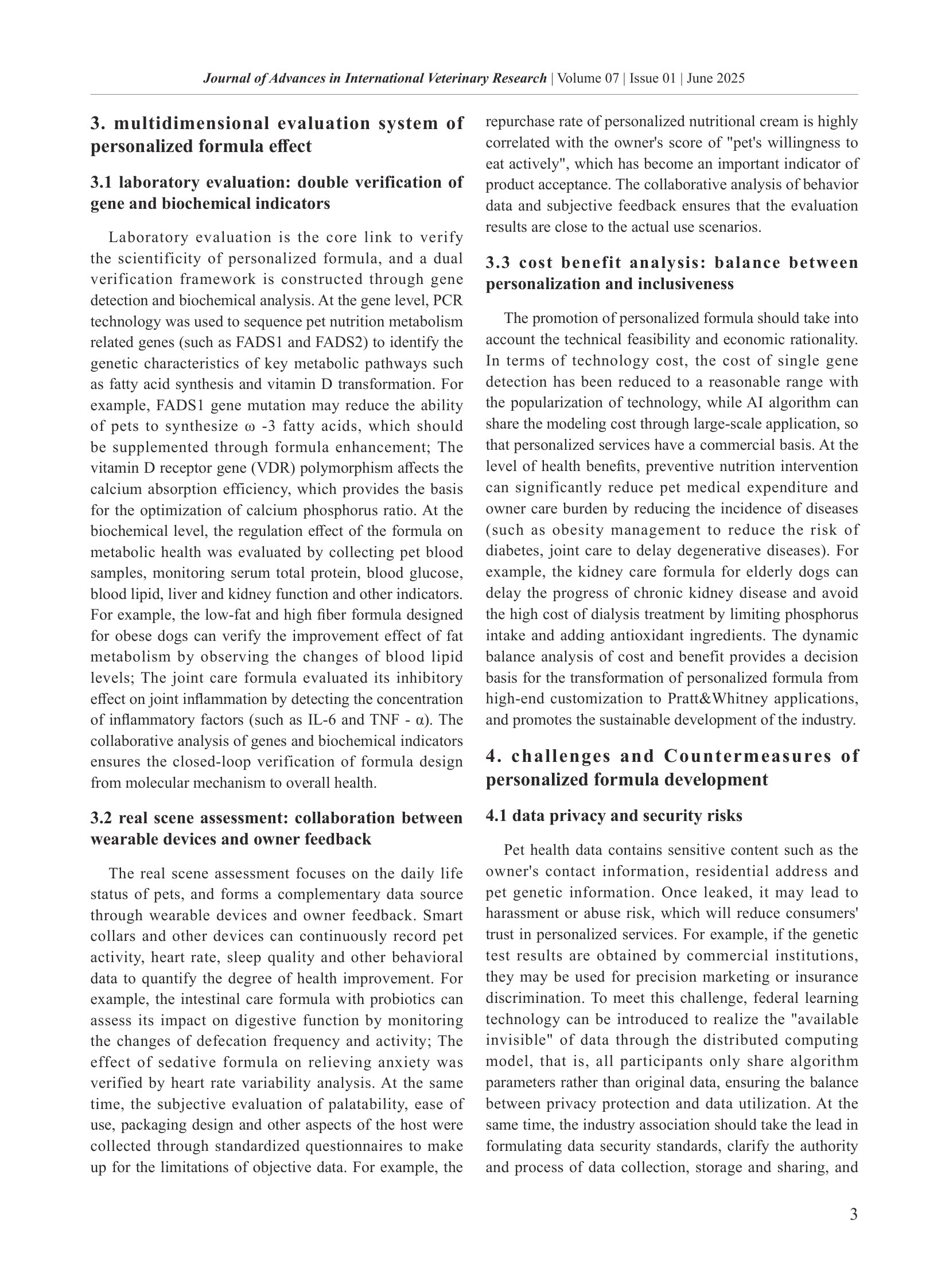
The study focused on the application effect of personalized formula in pet nutrition supplements and established a multidimensional evaluation system integrating gene detection, AI algorithms, and real-scene data. Key findings include:
1. Technical principles of personalized formulas. Gene detection technology can precisely identify pets' genetic characteristics and potential health risks. For example, MTHFR gene mutations may affect folate metabolism and increase cardiovascular risk; AI algorithm models mine massive pet health data ― breed, age, weight, medical history, dietary preferences ― to build nutrition demand prediction frameworks. Blockchain technology further ensures the security, traceability, and tamper-resistance of pet health data throughout collection, storage, and sharing.
2. Design logic: from "one size fits all" to "tailored". The study proposes a "basic nutrition + functional reinforcement" strategy. Senior dogs with declining kidney function need phosphorus restriction; puppies need high-calcium formulas during bone development; obese dogs benefit from L-carnitine to promote fat metabolism; cats prone to urinary stones may need cranberry extract to acidify urine; dogs with sensitive skin can be supplemented with ω-3 fatty acids and vitamin E to relieve inflammation and repair the skin barrier.
3. Advanced technology tools. 3D printing technology customizes bite shapes according to pet oral structures; nano-encapsulation technology wraps easily oxidized components such as fish oil in protective polymer layers of 100‒500 nm, improving the room-temperature stability of ω-3 fatty acids by more than three times. The paper highlights two patented coating technologies developed by the company: the Dr.kalan compound probiotic coating technology, which significantly enhances probiotic activity and survival at room temperature, ensuring stable intestinal regulation after processing and storage; and the Dr.kalan collagen peptide coating technology, which protects collagen peptides against gastric acid damage so functional ingredients are fully absorbed in the intestinal tract.
4. A multidimensional evaluation system. The research combined laboratory evaluation with real-scene assessment. At the gene level, PCR sequencing of nutrition metabolism genes (such as FADS1 and FADS2) identified key metabolic pathway characteristics; at the biochemical level, blood samples were analyzed for serum total protein, glucose, lipids, liver and kidney function, and inflammatory factors such as IL-6 and TNF-α. Real-scene assessment leveraged smart collars and wearable devices to continuously record activity, heart rate, and sleep quality, complemented by standardized owner feedback questionnaires.
5. Cost‒benefit and sustainability. The study confirmed that declining gene testing costs and scaled AI applications make personalized services commercially viable, and preventive nutrition intervention can significantly reduce pet medical expenditures. It further proposes sustainable pathways such as insect protein and biodegradable PLA packaging.
The experimental results demonstrate that personalized formulas can significantly improve pets' nutrition absorption efficiency while reducing metabolic burden. The study also proposes a standardized assessment framework that draws on AAFCO guidelines and FEDIAF European pet food regulations, adapted to the health characteristics of Chinese pets.
This research fills a gap in China's personalized pet nutrition field and provides a theoretical foundation and practical reference for the precise transformation of the pet nutrition industry. Equally important, it provides solid scientific grounding for Shandong Aonai's product innovation. The Dr.kalan coating technologies described in the paper are core intellectual property assets the company has been building for years, and corresponding international invention patent applications have been filed in multiple jurisdictions.
Shandong Aonai Biopharmaceutical Co., Ltd. is a science-driven pet health enterprise located in the Wenshui Industrial Park, Pingyi County, Linyi City, Shandong Province, China. The company integrates R&D, production, and sales, with a product portfolio spanning dog joint supplements, dog multivitamins, dental care products, and digestive & probiotic supplements under its Dr.kalan brand. As an experienced pet supplement manufacturer and pet supplement supplier, the company offers flexible OEM/ODM, private label, and custom formula services to brands and distributors worldwide. Its quality assurance system is backed by an FSPCA PCQI-certified R&D team, and the company holds multiple international invention patent applications covering its Dr.kalan compound probiotics and gastric acid-resistant collagen peptides.
Committed to "quality first, safety first, technology driven," Shandong Aonai is dedicated to delivering safe, scientific, and premium pet health products to pets and pet parents around the world.